Editor’s note: This article originally appeared in Wired. Prior to joining the Eclipse team, Greg was Tesla’s VP of Production where he led growth from low volume Roadster production to the fully integrated manufacturing of the Model S and X.
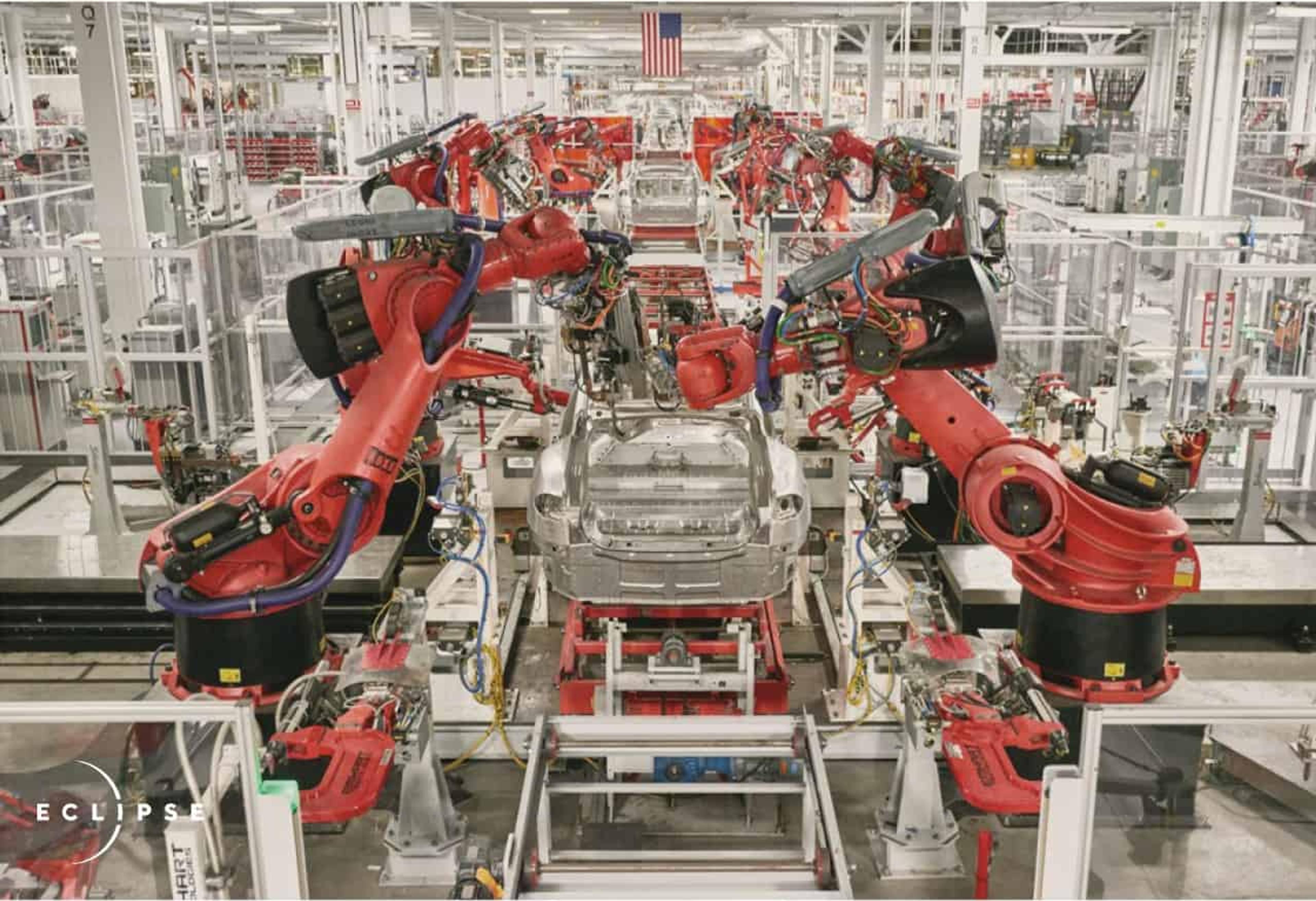
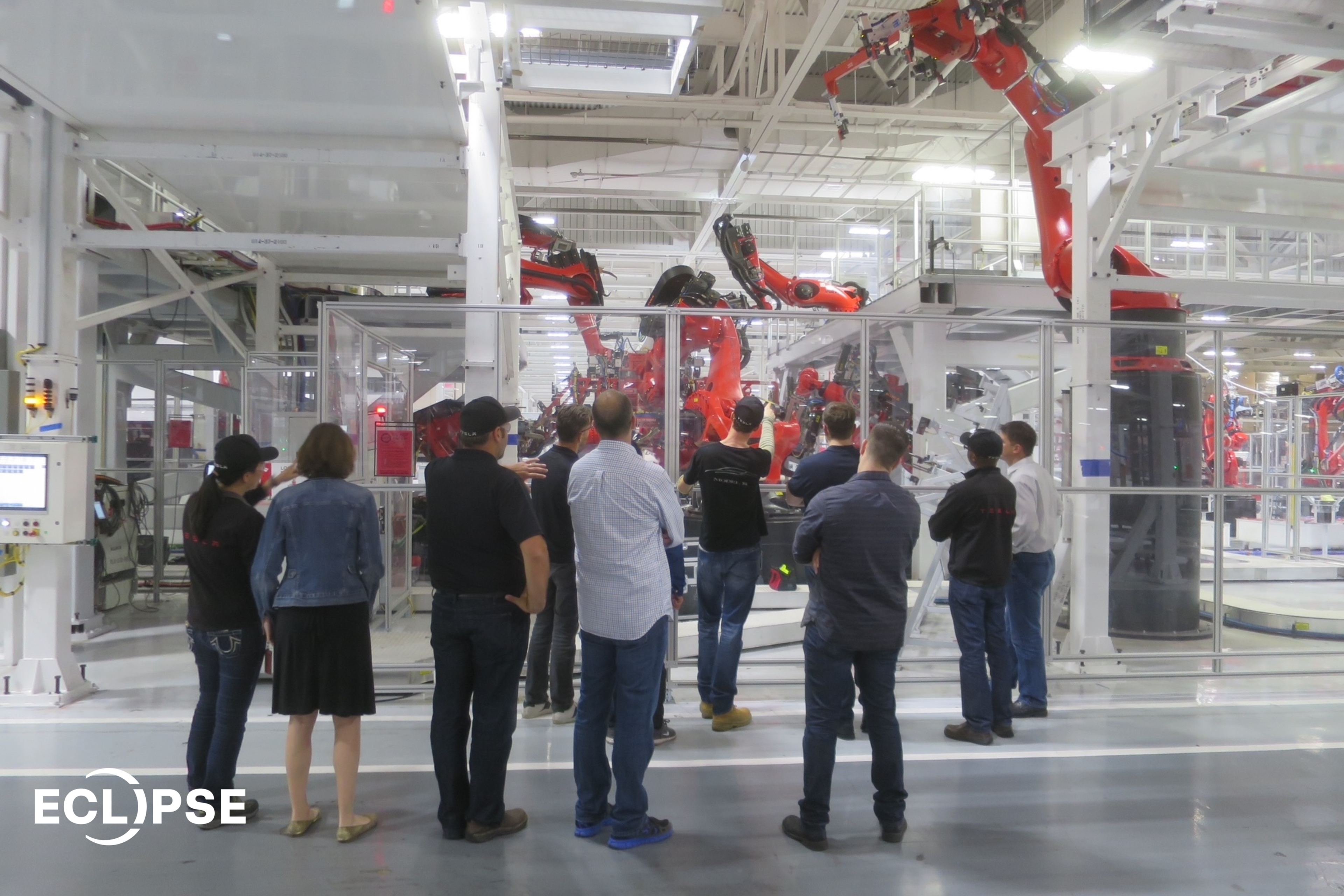
While working at Tesla, I always enjoyed talking to people after they finished a factory tour. As much as they raved about the amazing automation, gigantic presses, and hundreds of robots, the reality was they only saw half of the actual manufacturing that was taking place in the building. Unknown to most visitors, the factory’s “secret” second floor built many of Tesla’s battery, power electronics, and drive-train systems. It was home to some of the most advanced manufacturing and automation systems in the company. Some of the robots moved at such high speeds that their arms needed to be built from carbon fiber instead of steel. Though it was obvious why we were building the systems at the heart of our product, such as the battery and motors, many people had difficulty understanding why we manufactured high-voltage cables, displays, fuses, and other smaller systems. Had we spent too much time inhaling the “we know better” fumes of Silicon Valley? Why take on the madness of not only starting a new car company but also making it more vertically integrated than any car company since the heyday of the Ford Rouge plant in the late 1920s? The answer is simple: Our goal wasn’t to build the best electric vehicle. It was to build the best premium car in the world that just happened to be an EV. This meant integrating technologies that were not readily available. It also meant pushing the boundaries of what was considered “normal” for the design and manufacturing of a car. Furthermore, we needed to do this on an accelerated timeline that most automotive suppliers could not fathom. So, in many cases, this meant building components ourselves. Building your own core components has obvious benefits, but there are some other advantages that you might not immediately recognize. Speed is the first advantage. Launching a new product presents a team with thousands of small decisions. If you choose to outsource a component, you often need to send people to live in the factory for a prolonged period of time. This means accepting that it’s going to be harder to make choices and to influence outcomes. First, you’re operating within someone else’s environment. Second, you have far less of the product design team available for on-the-spot consultation and decision-making. Nothing beats the ability to have the full engineering team walk into the manufacturing area every day, talk to the people building the products, and gain insights on how to improve. Factory information has a very short half life. Despite what many contract manufacturers promise, the reality of outsourced manufacturing is that you are getting on an airplane to solve problems you could otherwise solve by walking across your building. The second reason building your own products makes sense is that it enables you to drive faster cycles of learning and improvement. The idea of bundling improvements and building them into the next platform every three to four years (the typical development cycle for the car industry) made absolutely no sense to us at Tesla. Rolling many improvements into a package often means that some items get delayed waiting on some other item that’s essential to their production, which results in a lower cumulative improvement rate. Our approach at Tesla was to adopt improvements as soon as they were ready. This meant we were implementing up to 50 changes per week. We often joked that if you wanted to know the “model year” of your Tesla, you needed to look at the individual car’s VIN number. Despite mastering real-time changes to products, this approach created minor inefficiencies in our manufacturing system. Yet what was more important: extracting a couple percentage points of manufacturing efficiency, or building a product that was rapidly improving and pulling farther ahead of the competition? Nothing beats the speed and ability to change like having your own manufacturing operation. Finally, when you build something yourself, you develop a far deeper understanding of your product and how to improve it — and the pain of doing it yourself gets transmuted into gold. A great example is the innovation that allowed Tesla to make possible. One of the constraints in increasing the power output of the battery in the early Model S was the safety fuse and switch system that was integrated into the pack. A fuse? How hard could it be to find a fuse that enables the increased current levels needed for this performance? It turns out that it is really hard to build a fuse that allows a massive amount of current to flow during normal operation while also protecting the car in milliseconds if there’s an abnormal spike in current flow. Building fuses in-house helped us solve this problem. The coupling of deep product knowledge with a fundamental understanding of the underlying physics allowed us to do what most people thought was impossible. As a result, Tesla drivers everywhere are grinning slyly as they shock their passengers with the thrill of a 0-to-60 sprint in under 2.8 seconds. Is building your own product always the right answer? Certainly not. If you’re building a product that leverages commodity items and will not change significantly, then it doesn’t make sense to build yourself. Yet if you’re building a product that contains unique intellectual property or has a high change velocity, it can be the best choice. A layered capacity strategy is often the right approach. Start by building the product with your own small manufacturing operation, ideally in the same building as your engineers, designers, and product teams. Use this pilot line to learn quickly, iterate, and develop an understanding of what it takes to build your product. As you then scale beyond this initial capacity, layer on outside contract manufacturing capacity. This strategy has several advantages. First, you gain the knowledge to keep the contract manufacturers honest. Need to make a small change to the product? Test it on your internal pilot line and then deploy it to your contract manufacturer. This short-circuits arguments over how much additional labor is needed because you already have direct experience with the incremental costs. Second, this initial line becomes your platform for developing the next-generation product and building samples. With a layered capacity approach, you enjoy the benefits of fast cycles of learning while also leveraging the more efficient supply chain of larger contract manufacturers. Why am I so passionate about this? Early in my career, I was a participant in the offshoring of US manufacturing. We built factories that were pushing the state of the art in several areas of technology — yet all of it was outside of the US. Because of this trend, American industry lost some of the fundamental knowledge that comes from building your own products. For too long now, a fear of has gripped enterprises and entrepreneurs. To solve many important problems, you need to touch the physical world. Disease, energy, infrastructure, mobility, and other complex challenges require multidisciplinary solutions that include hardware. We need bold founders to tackle these important problems. The time has come for us to build things again — and recapture the knowledge and competitive advantage it creates for our businesses and communities. Disease, energy, infrastructure, mobility, and other complex challenges require multidisciplinary solutions that include hardware. We need bold founders to tackle these important problems. The time has come for us to build things again — and recapture the knowledge and competitive advantage it creates for our businesses and communities. American industry lost some of the fundamental knowledge that comes from building your own products. For too long now, a fear of building new hardware has gripped enterprises and entrepreneurs. To solve many important problems, you need to touch the physical world.