Eclipse Partner Aidan Madigan-Curtis highlights the critical need for innovative energy storage solutions to meet the growing demands of edge computing.

Today tech giants are navigating a striking paradox: they’re insatiably hungry for computational power, yet fiercely committed to a sustainable future.
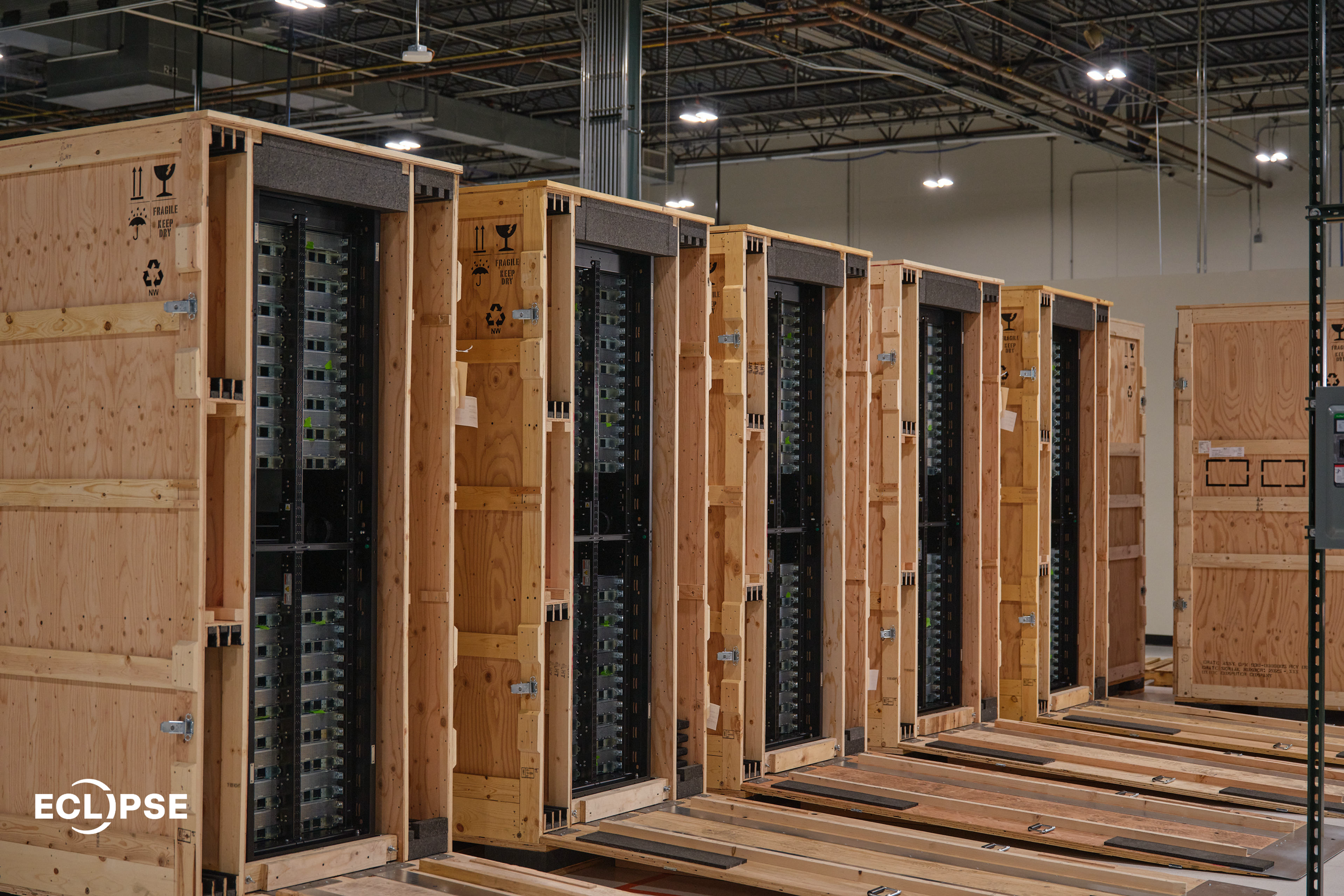
The staggering power consumption of today’s data centers (especially hyperscale ones used for AI) is outpacing sustainability advancements and poses significant energy challenges, demanding a new approach to meet these challenges. A single hyperscale data center — like those operated by AWS, Azure, and Google Cloud — can require up to 150 megawatts of power, equivalent to a mid-sized city. Even before the LLM boom, U.S. data center power consumption was projected to double from 17 gigawatts in 2022 to 35 gigawatts by 2030. New data centers are pushing electricity demand to unprecedented rates, and the stock markets are taking notice. New data centers are driving up electricity demand, causing the utilities sector of the S&P 500 Index to climb 18% over the past few months.
Existing major data center hubs like Virginia (VA), which handle nearly 70% of global digital traffic, are feeling a massive strain on energy grids, struggling to keep up without the energy and transmission capacity to manage the growing demand. Dominion Energy, the largest electricity provider in the VA, foresees a doubling of CO2 emissions and plans for new fossil fuel infrastructure.
Balancing energy use and sustainability is a constant tradeoff. As the world heats up, corporations have a responsibility to conserve energy and reduce climate-heating emissions. And as AI and advanced manufacturing become increasingly important drivers of our global economy, the demand for sustainable power solutions for data centers will only intensify.
Renewable energy commitments
To reach carbon-free energy goals, top tech companies have locked in power purchase agreements with renewable energy suppliers. Meanwhile, hyperscalers are starting to fund the building of renewable-energy plants in the face of soaring prices caused by supply shortages. Collectively, the hyperscalers — Amazon, Apple, Google, Meta and Microsoft — have developed renewable energy projects with a total capacity of over , enough to power about 33.75 million homes. Roughly 57% of the global corporate wind and solar capacity is tied to just these five companies. But there are still significant challenges and opportunities for innovation, particularly in the realm of energy storage.